East Vancouver Island & Mainland Inlets
A striking split in the region sees increasing numbers of Chinook, coho, and pink salmon while chum salmon, sockeye, and steelhead remain below average
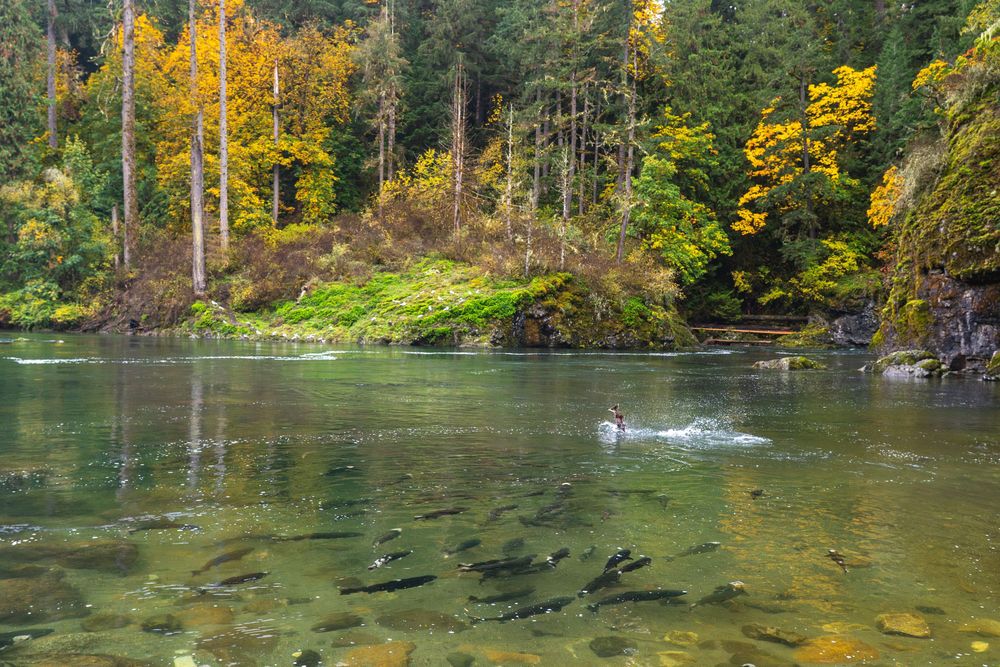
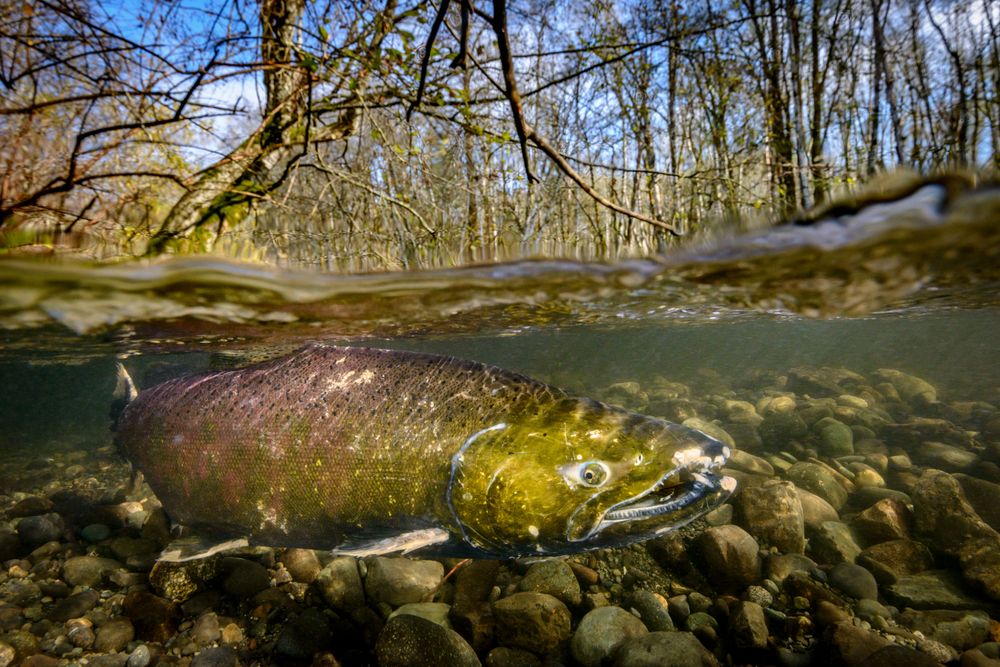
East Vancouver Island & Mainland Inlets is one of the southern regions where Chinook are above their long-term average. Several populations are thriving, including in the Cowichan River where Chinook returns have reached record highs after a low of just 500 natural spawners in 2009. Many Chinook populations in the region are supplemented by hatcheries (see Factors; Hatcheries), but favourable conditions in the Strait of Georgia are benefiting wild salmon as well.
Coho and pink salmon are also above average. Chum salmon returned in relatively high abundance in 2024 but remain below average based on the most recent generation. Sockeye spawners are also below average and counts in rivers such as the Nimpkish have lagged increases in nearby Fraser and West Vancouver Island regions. Steelhead are below average and declining, with 2025 spawner surveys finding just half the usual counts.
Except for Chinook, assessments in this region draw from hundreds of stream surveys, but still many streams go unmonitored. As such, these estimates don’t reflect all the spawners in the region - and can’t be added to catch statistics to yield total abundance.
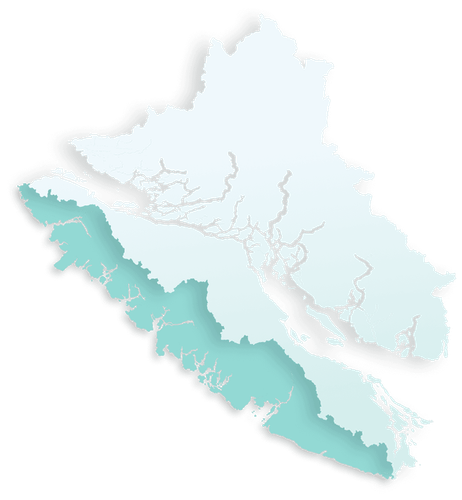
State of Salmon - East Vancouver Island & Mainland Inlets

Our Approach
There are different ways to measure the state of salmon, and each approach tells us something unique about how salmon are doing.
CURRENT STATE is the spawner or total abundance over the most recent generation as a per cent anomaly from the long-term average and provides information on how abundant salmon are now relative to past years.
TRENDS measure the direction of change, either over the short-term (most recent three generations) or long-term (all available years). This is complementary information to the current state, and a species that has a declining trend may be a conservation concern even if the current status is above average.
Click on a species for an interpretation of the current state and trends.

Arrows indicate if the trend in abundance is increasing or decreasing.

A horizontal line indicates if the trend in abundance is stable.

A question mark indicates an unknown current state or trend due to a lack of readily accessible data.

An exclamation mark indicates critically low abundance.


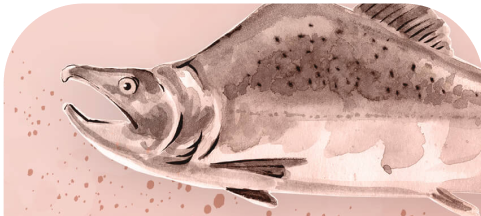
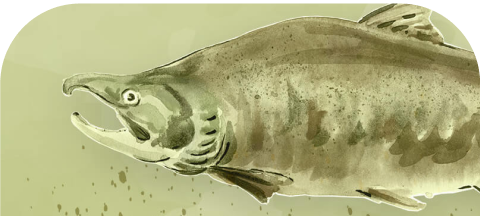
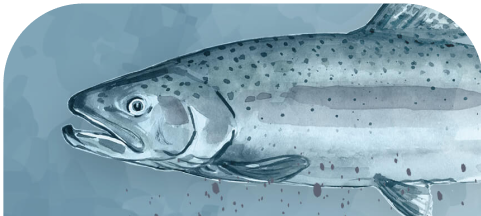
SPECIES NOT PRESENT
SPECIES NOT PRESENT
SPECIES NOT PRESENT
SPECIES NOT PRESENT
SPECIES NOT PRESENT
SPECIES NOT PRESENT
SPECIES NOT PRESENT
SPECIES NOT PRESENT
SPECIES NOT PRESENT
SPECIES NOT PRESENT
SPECIES NOT PRESENT
SPECIES NOT PRESENT
How to Interpret this Graph
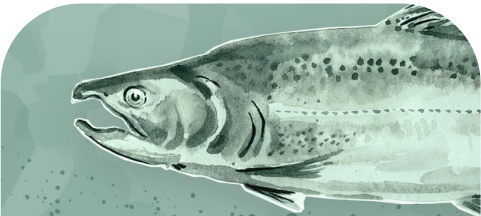
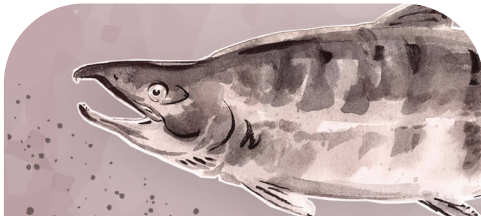
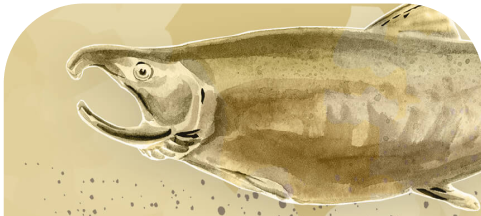
Each fish above shows the per cent anomaly of current spawner abundance or total abundance over the most recent generation compared to the long-term average (horizontal line) for each region and species.
Interested in learning more? Check out the Pacific Salmon Explorer for a data-driven look at Pacific salmon Conservation Units and their habitats within each region.
For more details on our assessment approach, view our Methods.
Well above long-term average. No conservation concern.
Above long-term average. Current outlook is good.
At or near long-term average. Precaution is warranted.
Below long-term average. Current outlook is poor.
Well below long-term average. Significant conservation concern.
Critically low. At risk of local extinction.
Unknown state due to a lack of readily accessible data.
REGION PROFILE
East Vancouver Island & Mainland Inlets
Conservation Units are irreplaceable groups of salmon that have unique genetic and life-history traits. Maintaining multiple Conservation Units within a region strengthens the resilience of the species as a whole and helps it withstand and adapt to changing conditions. The number of Conservation Units provides a good indication of the salmon biodiversity in the region.
Notable Salmon-Bearing Rivers
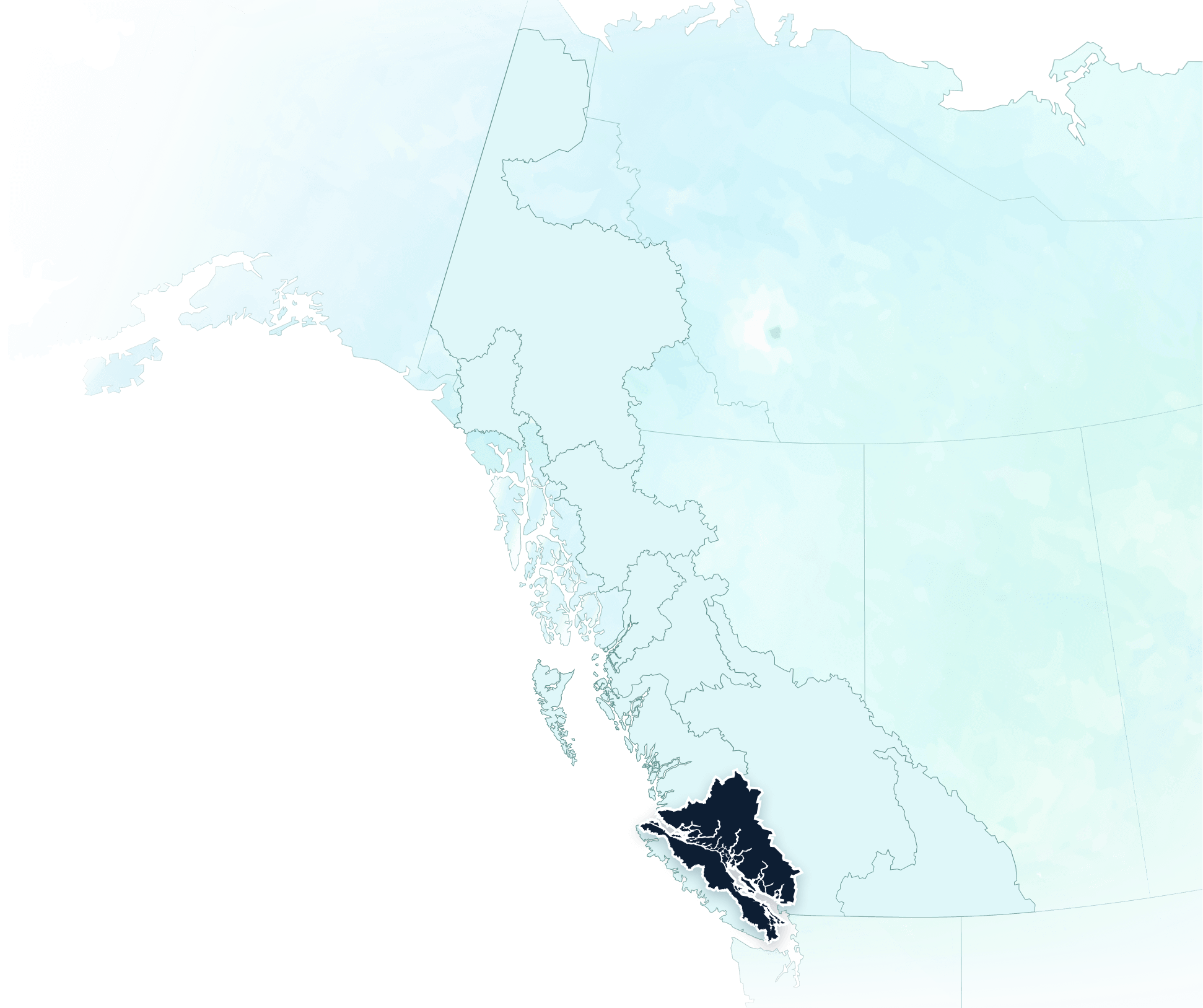
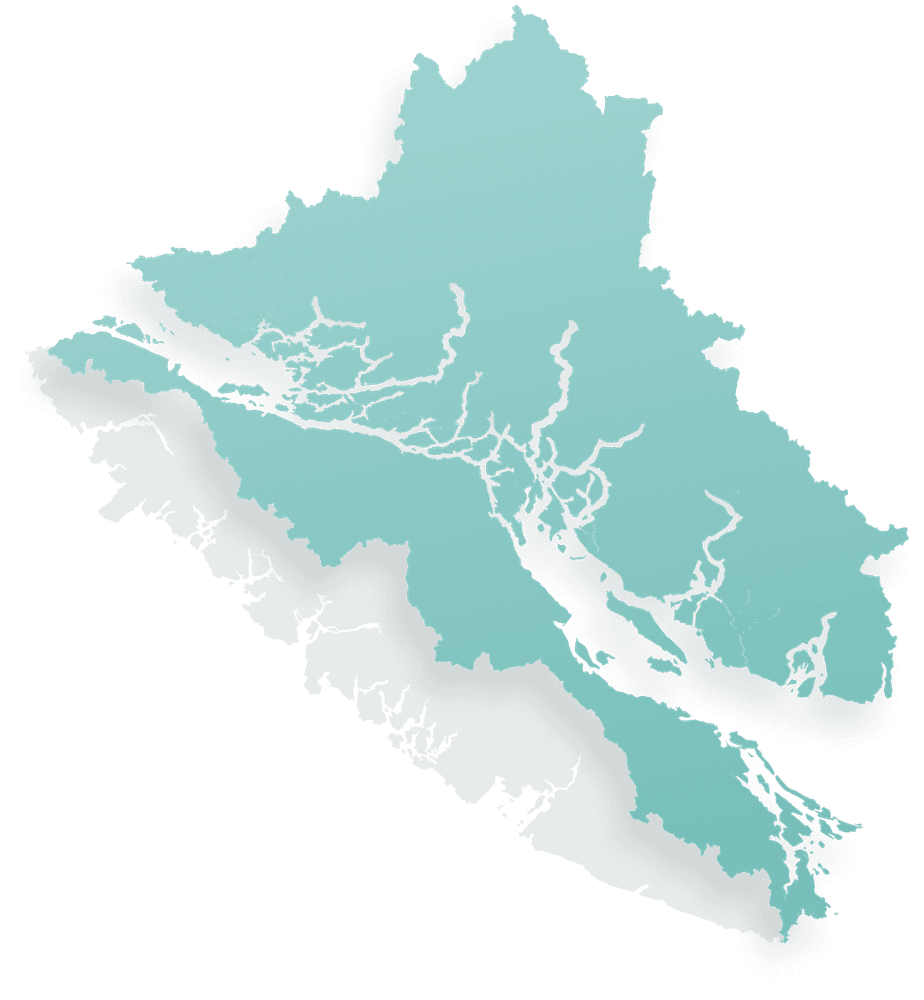
The East Vancouver Island & Mainland Inlets Region encompasses 53,305 square kilometres across the east coast of Vancouver Island and the adjacent mainland fjords and inlets, from Burrard Inlet and Howe Sound in the south to Smith Inlet and the Broughton Archipelago in the north. This region includes large, glacier-fed rivers in the mainland inlets to small coastal streams on Vancouver Island. Southeast Vancouver Island has a uniquely dry micro-climate compared to the rest of the region due to the rain-shadow effect from the surrounding Vancouver Island and Olympic mountain ranges, making streams more prone to drought conditions. This climate is in stark contrast to the rest of the region, which has high annual rainfall typical of temperate rainforest ecosystems.
East Vancouver Island is highly urbanized, impacting the natural functioning of aquatic ecosystems. The Nanaimo River estuary is one heavily developed area with ferry terminals, a shipping terminal, marinas, and log booms affecting salmon habitat†. The vast array of armoured coastlines along east Vancouver Island also impacts salmon by eliminating spawning and rearing habitat and reducing prey supply.
Many salmon from the region spend their early marine life in the Salish Sea, a semi-enclosed sea between Vancouver Island and the mainland, with a significant freshwater influence from the Fraser River. Most of these salmon exit the Salish Sea through Johnstone Strait in the north. The Salish Sea has experienced cycles in productivity that influence early marine survival of salmon and were associated with sharp decreases in survival of Chinook, coho, and steelhead in the 1990s. Higher survival of Chinook and coho over the last few years suggest this may be changing.